Caribbean Food Centennial: 100 Years of Culinary Creativity
A centennial is a useful excuse to slow down and notice what has actually endured. Caribbean food rewards that kind of attention. Across the last hundred years, the region’s cooking has never stood still, yet it has held onto a core identity built on memory, movement, and improvisation. To talk about a Caribbean food centennial is not to pin one cuisine to one island or one people. It is to recognize a century of culinary creativity shaped by migration, colonization, trade, scarcity, celebration, and a stubborn refusal to let flavor flatten into sameness.
Anyone who has cooked seriously from the Caribbean knows that the food is larger than its postcard image. It is not just jerk, rum, patties, roti, and rice and peas, though all of those matter. It is also cassava bread baked in quiet continuity with Indigenous knowledge. It is salted cod transformed through necessity into a beloved breakfast. It is green seasoning crushed by hand, curry leaves hitting hot oil, pimento smoke rising from a roadside drum, and cane vinegar sharpening a pepper sauce that tastes different from parish to parish, household to household.
Over the past century, Caribbean kitchens have done something remarkable. They have absorbed wave after wave of outside influence without surrendering their center. That is the real story, and it is why the phrase caribbean food centennial feels apt. A hundred years of change, and the food still tastes unmistakably like itself.
The century lives in the pot
The Caribbean in the 1920s did not eat the way it does now, but many of the structures were already in place. Plantation economies had long reorganized land, labor, and appetite. Enslavement and indentureship had brought Africans, Indians, Chinese, Portuguese, Syrians, Lebanese, and Europeans into intimate proximity, often under brutal conditions. Markets formed around what people could grow, trade, preserve, and carry. Kitchens became laboratories of adaptation.
That history explains why Caribbean food is rarely pure in the narrow sense, yet often deeply coherent. A cook in Trinidad making pelau, a cook in Jamaica tending a pot of rundown, and a cook in Puerto Rico stirring sofrito into beans are all working within systems shaped by survival and synthesis. Rice enters one route, legumes another, spices another, technique another, and over time the combinations stop feeling borrowed and start feeling native.
The last hundred years intensified this process. Urbanization drew people from rural districts into towns and ports. Refrigeration gradually changed how meat and fish were bought and stored, though unevenly. Tourism created demand for “national dishes,” sometimes clarifying traditions and sometimes simplifying them for visitors. Migration to London, Toronto, New York, Miami, Amsterdam, and beyond extended Caribbean cooking into diasporic neighborhoods where ingredients had to be substituted, shipped, or grown in backyard plots.
What is striking is not that the food changed. All living cuisines change. What matters is how Caribbean cooks changed it: with precision where outsiders saw looseness, and with discipline where outsiders assumed spontaneity. Ask an experienced home cook why her callaloo tastes different from someone else’s and she will not say “it just does.” She will talk about the type of dasheen bush, whether okra is added early or late, how much coconut milk is enough before the pot turns heavy, how much Scotch bonnet heat should perfume without bludgeoning. That is craft, not accident.
Indigenous foundations that never disappeared
Too much writing about the region begins history when Europeans arrive. The plate tells a different truth. Indigenous foodways never vanished. Cassava, maize, peppers, sweet potato, annatto, and methods of grating, pressing, smoking, and flatbread making remained in circulation, sometimes visibly and sometimes folded into later traditions.
Cassava deserves special attention. It is one of the great anchors of Caribbean eating, though it often gets less attention than flashier dishes. In places such as Dominica, St. Vincent, Guyana, and among communities with stronger continuities of Indigenous practice, cassava bread and farine represent technical knowledge that predates the colonial kitchen. Processing bitter cassava safely is not a casual skill. It requires judgment, repetition, and trust in inherited methods.
Pepper, too, belongs in this older lineage. The Caribbean relationship to heat is not merely about bravado. Heat preserves, stimulates appetite in humid climates, and layers flavor. A well-made pepper sauce is not simply “spicy.” It can be fruity, smoky, vinegary, mustardy, floral, or deeply vegetal depending on the peppers and the base. That sophistication has been present for generations.
When people celebrate a Caribbean food centennial, they often focus on the dishes that became widely recognizable in the twentieth century. That makes sense, but it misses the older roots feeding the tree. The centennial story is not only about innovation. It is also about continuity under pressure.
African technique, memory, and abundance from constraint
No serious account of Caribbean food can understate the African contribution. It is visible in ingredients, yes, but even more powerfully in technique, palate, and the logic of the meal. One-pot cooking, fritters, stews, braising, pounding, frying, leaf cookery, rice dishes, and the deep understanding of provisions all carry African inheritance, though local expressions vary.
Look closely at how many cherished dishes come from making much out of little. That was not romantic. It was necessary. Salt fish, pig tails, offal, breadfruit, plantain, yam, pigeon peas, black-eyed peas, and green bananas are all linked to economies where prime cuts and imported luxuries were limited or reserved for others. But scarcity alone does not explain why the food is so compelling. Technique does.
A cook who knows how to soak and flake salt cod properly, build a base of onion, thyme, pepper, and tomato, then finish without turning the fish mushy is exercising exacting skill. The same is true of frying plantain at the right stage of ripeness, or balancing smoked meat in beans so that it seasons without dominating. Caribbean food often works by concentration. A few ingredients, handled well, create depth far beyond their number.
This is also where oral transmission matters. For decades, recipes moved less through cookbooks than through demonstration, correction, and repetition. “Watch the color.” “Smell when the seasoning is ready.” “Let it catch just a little, not burn.” Those instructions are incredibly precise once you understand the context. They teach sensory cooking, and sensory cooking travels well across generations even when exact measurements do not.
The East Indian imprint and the remaking of spice
Indentureship after emancipation transformed the food of several territories, especially Trinidad and Tobago, Guyana, Suriname, and parts of Jamaica and Guadeloupe. East Indian communities brought techniques, spices, breads, sweets, and agricultural habits that the region did not simply preserve intact. It remixed them.
Roti in the Caribbean is a perfect example. It has roots in South Asian flatbreads, but the versions found in Trinidad or Guyana took on local fillings, local heat, local habits of street vending, and local expectations of portability. Buss up shut, dhalpuri, and paratha-style variations became more than diaspora keepsakes. They became part of the national food vocabulary.
Curries tell a similar story. Caribbean curry is not interchangeable with Indian curry, a point that experienced cooks tend to defend strongly because the distinction matters. The spice blends shifted according to local supply and taste. Green seasoning entered the picture. Geera, turmeric, garlic, shadow beni, Scotch bonnet, and allspice might appear in combinations that would feel entirely at home in the Caribbean and nowhere else. Goat, duck, channa and aloo, shrimp, mango, and even lobster could enter the curry pot depending on island and occasion.
One of the most important developments of the twentieth century was the normalization of these formerly community-specific foods into mainstream national eating. That did not happen everywhere at the same pace, and it was not free of social hierarchy. Yet over time, dishes once marked caribbean food centennial as Indian, African, Chinese, or “creole” crossed household lines. The result was not dilution. It was expansion.
Chinese shops, Portuguese bakeries, Syrian traders, and the everyday mixed plate
The Caribbean’s culinary history is often summarized through the largest migrations, but smaller communities also left practical, daily marks. Chinese-owned groceries and restaurants shaped urban food culture across several islands. Portuguese bakers and merchants influenced breads, sweets, and commercial food retail. Syrian and Lebanese traders participated in food distribution networks and in the wider commercial life that changed what ingredients moved where.
These influences can be hard to name because they often disappear into the ordinary. A certain style of sweet bread, the local bakery habit, the expectation that soy sauce belongs in a stir-fried noodle sold from a takeout counter, the availability of canned goods, evaporated milk, and imported staples, all of that changed how Caribbean families ate over the twentieth century.
In many islands, the Chinese restaurant became one of the earliest spaces where local people encountered a form of eating out that was both everyday and aspirational. Not necessarily fine dining, but a step outside the home. Menus evolved to suit local taste. Fried rice got darker, sweeter, hotter, or more heavily sauced. Chicken dishes became fixtures at parties. In some places, chow mein entered the standard repertoire of holiday cooking so completely that people stopped thinking of it as foreign.
This is the genius of Caribbean culinary culture. It naturalizes influence without erasing its origin. A dish can arrive from elsewhere, be transformed through local hands, and then become a memory marker for entirely new communities.
Markets, yards, and roadside fires
If there is one place where the last hundred years of Caribbean food creativity can be seen most clearly, it is not in luxury restaurants. It is in markets, backyards, and roadside cooking sites. These are the spaces where formal and informal economies meet. They are also where innovation is judged ruthlessly. If the food is weak, people do not come back.
Public markets train the palate. The scent of culantro or shadow beni, the visual test for fresh snapper eyes, the difference between a young coconut for water and an older one for grating, the feel of a ripe avocado in the palm, all of this is culinary knowledge with economic stakes. Buy poorly and dinner suffers. Buy wisely and even a humble meal sings.
Roadside cooking developed its own standards over the twentieth century as mobility increased and urban workers needed quick, filling food. Jerk pans in Jamaica, doubles stands in Trinidad, bake and shark vendors, soup men working dawn shifts, fry fish huts, barbecue corners, and late-night patty shops all represent more than convenience. They are institutions. They refine recipes through daily repetition and direct public feedback.
A good doubles vendor knows exactly how long the bara can sit before it loses elasticity. A jerk cook understands fire management in a way many professional chefs do not. Too much flame and the sugars scorch before the meat perfumes. Too little smoke and the result tastes flat. These are not romantic flourishes. They are the result of thousands of hours.
What the home kitchen guarded
Restaurants spread fame, but home kitchens preserved standards. Across the region, family cooking retained distinctions that commercial food often smooths over. This is especially clear in ceremonial dishes. Christmas ham, black cake, pastelles, sorrel, pepperpot, souse, mannish water, conch preparations, and Easter buns are never just recipes. They are annual rehearsals of identity.
The home kitchen also preserved slowness. Some foods cannot be rushed without becoming something else. Pepperpot, for example, improves through resting and reheating. Certain stews need time for connective tissue to loosen and for seasoning to move past the surface. Coconut-based dishes can split or flatten if handled carelessly. Puddings and pone rely on texture that machines can help with, but not fully substitute for.
Over the century, women carried much of this labor, often without recognition proportionate to their influence. Grandmothers, mothers, aunts, market women, domestic workers, and neighborhood specialists defined what “good food” meant in practice. Men certainly dominated some public cooking spaces, especially grilling and commercial street food, but the architecture of everyday Caribbean taste was built substantially by women cooking under pressure, often after long workdays, often for large households, often with tight budgets.
That context matters because it explains why Caribbean food developed such a fine-grained understanding of value. Economical food was not inferior food. It had to be satisfying, sustaining, and smart. The cook’s skill was measured partly by how well she stretched ingredients without making the table feel diminished.
Signature dishes that tell the century’s story
Some dishes carry the whole century inside them. They reveal migration, trade, adaptation, and local preference in a single plate.
- Jerk, especially in Jamaica, shows how preservation, smoke, spice, and maroon history converged into a method now recognized worldwide.
- Roti in Trinidad and Guyana demonstrates how migration can reshape a bread into a national icon with local fillings and local rhythms of eating.
- Rice and peas, pelau, cook-up rice, and similar one-pot rice dishes show thrift, layering, and the social importance of feeding many people well.
- Ackee and saltfish, callaloo, and saltfish buljol reveal the region’s talent for turning preserved imports and local produce into distinct, balanced dishes.
- Patties, doubles, and street snacks show how portability and working-class demand drove some of the most inventive food forms of the twentieth century.
Each of these foods also illustrates a trade-off. As dishes travel, they gain visibility but risk simplification. Jerk seasoning sold in a jar can be useful, yet it often misses the green freshness and wood smoke that define the real thing. A frozen roti skin may save time, but it changes the chew and the aroma. Fast-casual versions can introduce people to the cuisine, but they can also flatten regional differences that matter deeply to those who know them.
Diaspora kitchens and the second life of tradition
From the mid-twentieth century onward, migration transformed Caribbean food as decisively as anything that happened within the islands themselves. Large communities settled abroad and rebuilt taste under altered conditions. Sometimes ingredients were impossible to find at first. People substituted spinach for callaloo, habanero for Scotch bonnet, or whatever root vegetables the local shop carried. Later, specialty stores emerged, then import networks, then full restaurant ecosystems.
Diaspora cooking is often judged too harshly by purists, yet it deserves respect as a site of real innovation. Cold-weather cities changed appetites. Work schedules changed meal timing. Children raised abroad asked for school-lunch-friendly versions of foods their parents grew up eating fresh and hot. Bakers modified formulas for different flours and different humidity. Caterers learned how to produce festival, patties, or curry goat at scale for weddings and community events.
One of the most interesting developments has been the rise of chefs who grew up in diaspora households and returned to Caribbean ingredients with formal culinary training. At their best, they are not “elevating” the food, a phrase many find patronizing. They are translating techniques across contexts while taking the cuisine seriously enough to study it. The strongest among them understand that innovation without memory quickly feels hollow.
This is also where the caribbean food centennial becomes a living, global story rather than a regional one. A pot of stew peas in Brooklyn, a Trinidadian doubles pop-up in Toronto, a Guyanese bakery in Queens, and a Haitian griot restaurant in Miami are all part of the same hundred-year arc. The geography expanded, but the instincts remained.
Tourism, branding, and the risk of becoming your own stereotype
Tourism brought money and visibility, but it also encouraged caricature. Hotel buffet versions of “island food” often reduce a complex culinary landscape to grilled seafood, sweet cocktails, tropical fruit, and a few spicy signatures. The danger is not only that outsiders misunderstand the food. It is that local businesses begin tailoring themselves to those expectations and slowly neglect less marketable traditions.
That tension has been visible for decades. Some dishes travel easily because they are instantly legible to tourists. Others remain stubbornly local because they depend on acquired taste, precise timing, or ingredients that do not hold well. Soup on a hot morning, intensely seasoned organ meats, fermented elements, or labor-heavy holiday preparations may never become tourist stars, but they are central to the cuisine’s internal life.
The most thoughtful Caribbean hospitality operators have learned to navigate this carefully. They present famous dishes without letting them stand alone. They explain provenance. They keep local breakfast traditions alive. They source from nearby fishers, farmers, and pepper growers when possible. They resist the urge to sweeten, soften, or de-bone everything into blandness.
Good representation requires judgment. A menu should welcome newcomers, but not by pretending the cuisine begins and ends with what sells fastest.
What has changed in the last few decades
Recent years have introduced new pressures and opportunities. Imported processed food has become more common, and in some places it has displaced traditional staples with worrying effects on health. At the same time, there has been renewed interest in breadfruit, cassava, local cocoa, bush teas, heritage rice varieties, and older methods of fermentation and preservation.
Chefs, writers, and farmers are increasingly documenting what earlier generations often transmitted informally. That documentation matters, especially as climate change affects fisheries, rainfall, and crop reliability. Sea-level rise, stronger storms, and shifting growing conditions are not abstract issues for the Caribbean table. They influence what is affordable, available, and worth planting.
The future of the cuisine may depend on a few practical commitments:
- protect local ingredients by supporting growers, fishers, and market systems that keep regional produce viable
- document household techniques before they disappear with elders who were never asked to write them down
- teach younger cooks that convenience has a cost when it erases texture, balance, or seasonality
- welcome innovation, but insist that it be rooted in actual understanding rather than branding
- treat Caribbean food as serious culinary knowledge, not just festive atmosphere
That last point is especially important. For too long, Caribbean cooking has been praised for exuberance while being underestimated for intelligence. Anyone who has tried to make a truly balanced stew, a flaky patty, a supple roti, a clean pepperpot, or a proper black cake knows better.
The next hundred years are already underway
A centennial caribbean food centennial invites nostalgia, but nostalgia alone does not cook dinner. The power of Caribbean food lies in its continued ability to answer real conditions with beauty. It has fed plantations and protests, schoolchildren and wedding crowds, migrants carrying homesickness, and chefs trying to reclaim histories once treated as marginal.
Its creativity has never been cosmetic. It emerges from pressure, from trade, from memory, from sharp attention to what the land and sea can offer, and from a willingness to make room in the pot without losing the plot. That is why Caribbean food remains one of the world’s most dynamic culinary traditions. It does not survive by staying fixed. It survives by changing in ways that still taste true.
To mark a Caribbean food centennial, then, is to honor not a finished archive but an active practice. The old dishes are still moving. The seasoning is still being adjusted. Someone is right now testing a variation that may become standard in twenty years. Someone else is reviving a technique nearly lost. A grandmother is correcting a grandchild’s hand position over dough. A street vendor is deciding whether the oil is hot enough for the next batch. A fisherman is arguing the merits of one catch over another before dawn.
That is how a cuisine reaches a hundred years of documented modern life without becoming static. It stays in the hands of people who know that tradition is not a museum piece. It is something you taste, judge, improve, and pass on.
Reggae Pot Jamaican Grill
Address: 7562 S University Blvd Unit C, Centennial, CO 80122
Phone: (303) 997-5623
FAQ About caribbean food centennial
What Jamaican dishes can I try in Centennial?
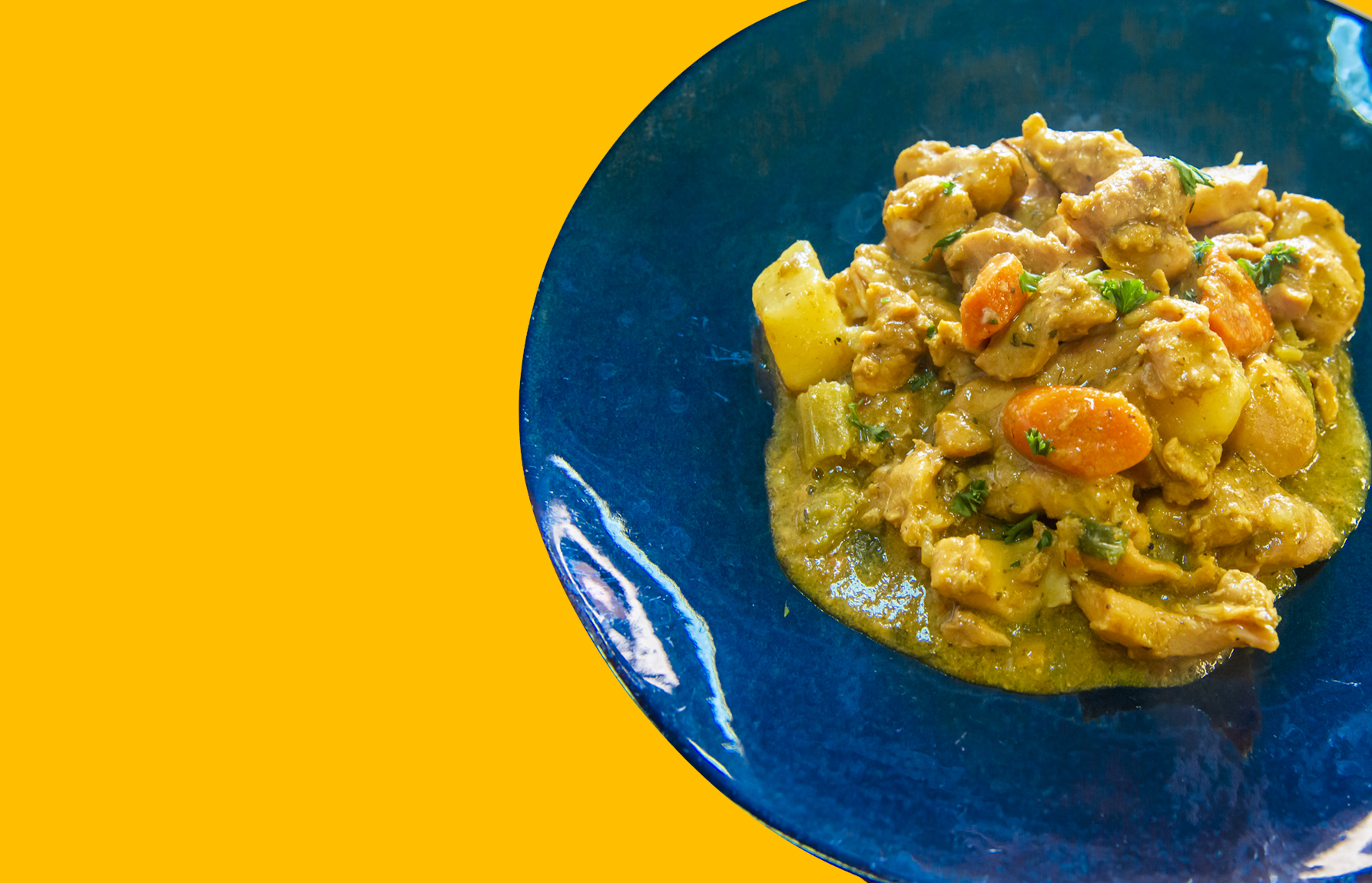
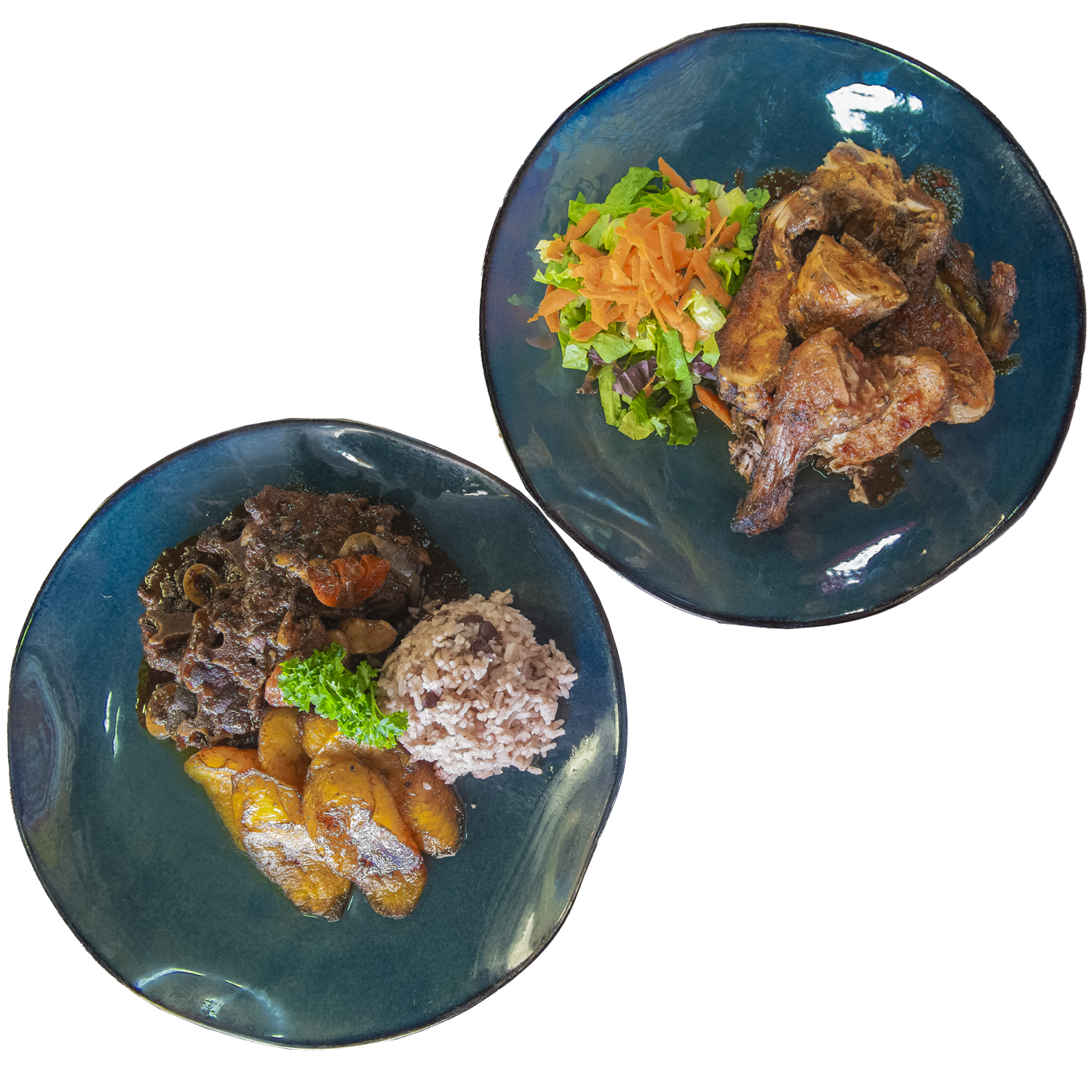
Reggae Pot Jamaican Grill serves Jamaican specialties such as jerk chicken, stewed oxtail, curry goat, and ackee and saltfish. Check the current menu for availability.
What is ackee and saltfish?
It is Jamaica’s national dish. The restaurant prepares ackee with salted cod, onions, thyme, tomatoes, garlic, black pepper, and pimento.
Can I order Jamaican food for pickup in Centennial?
Yes. Choose the Centennial location at 7562 S University Blvd Unit C when placing a takeout order.